Call us now :07317168908
 Send Inquiry
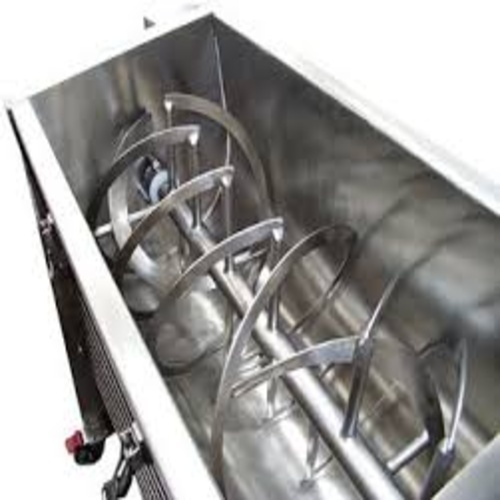
Ribbon blender

Ribbon blender Trade Information
- Minimum Order Quantity
- 01 Piece
- FOB Port
- Coimbatore
- Payment Terms
- Cash in Advance (CID)
- Supply Ability
- 15 Pieces Per Month
- Delivery Time
- 1 Week
About Ribbon blender
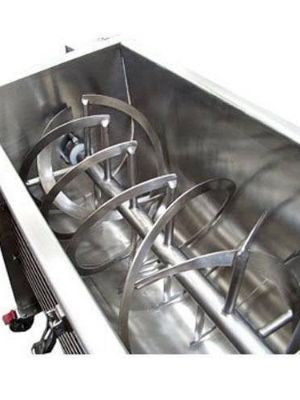
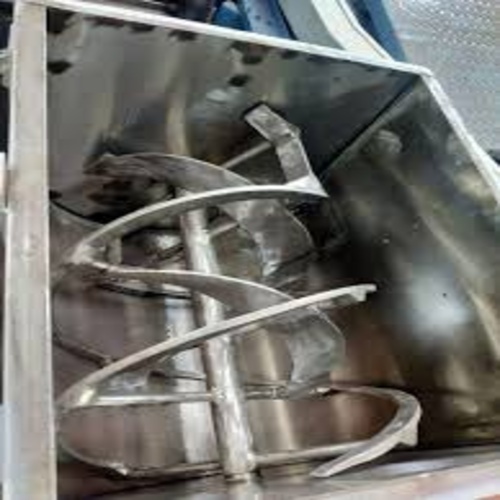
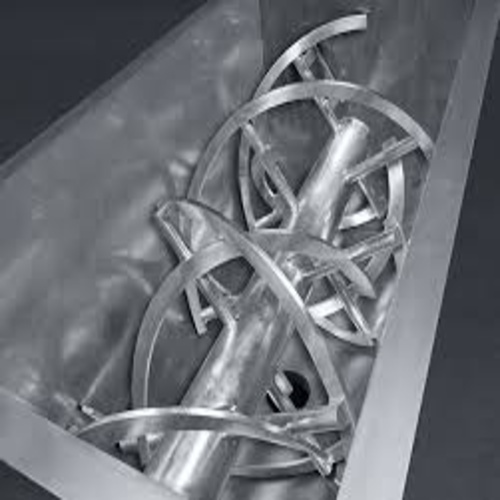
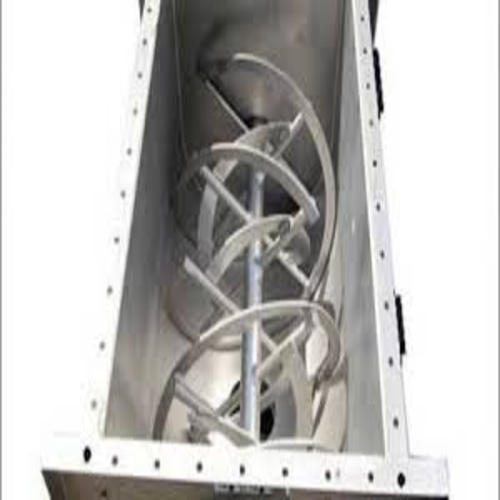
A ribbon blender is an industrial mixer designed for efficient, homogeneous blending of dry powders, granules, and pastes. It features a horizontal U shaped trough and a central shaft with inner and outer helical ribbons that move material in opposing directions, creating a convective, folding mixing action.
Key Components & Design
U shaped Trough: The horizontal vessel holding materials, typically made of stainless steel for hygiene and durability.
Ribbon Agitator: Comprises an outer ribbon (moves material toward the center) and an inner ribbon (moves material toward the ends).
Drive Mechanism: A motor connected via a gearbox drives the agitator shaft.
Discharge Valve: Located at the bottom center to allow complete product discharge.
Working Principle
Convective Mixing: The ribbons move material radially and axially.
Opposing Action: The outer ribbon moves material from the ends to the center, while the inner ribbon moves it from the center to the ends, ensuring thorough mixing.
Efficiency: This movement is designed to prevent dead spots and ensure rapid, high quality blending.
Common Applications
Food & Beverage: Spices, flour, drink mixes, and cake mixes.
Pharmaceuticals: Dry powders, granules, and medicinal components.
Chemicals & Plastics: Detergents, plastic resins, and fertilizers.
Cosmetics: Powders and thick creams.
Key Benefits
Versatility: Handles a wide range of dry and semi wet materials.
High Efficiency: Provides fast blending times, often within minutes.
Easy Maintenance: Simple design often allows for quick cleaning.
Common Capacities
Ribbon blenders are available in various sizes, ranging from small laboratory models.
Tell us about your requirement

Price:
Quantity
Select Unit
- 50
- 100
- 200
- 250
- 500
- 1000+
Additional detail
Mobile number
Email


 Send Inquiry
Our Products
- Rice Mill Machine
- Tray Dryer
- Oil Expeller Machine
- Oil Mill Plant
- Rice Destoner Machine
- Peanut Machines
- Copra Cutter
- Murukku Making Machine
- Seed Cleaning Machine
- Filter Press
- Flour Mill Machine
- Rice Flour Mill
- Grinding Machine
- Wheat Grinding Machine
- Dal Broken Machine
- Commercial Tilting Wet Grinder
- Athirusam Machine
- Vegetable cutter
- 2 liter short body wet grinder
- 2 liter table top wet grinder
- Dal skin removing machine
- Plate Mill Pulvarisor
- 3 liter table top wet grinder
- 3 liter table top tilting wet grinder
- 5 to 50 liter wet grinder
- Chappathi Press Machine
- Dough kneader
- Dough ball cutting machine
- Vegetable & Carrot Juicer
- Potato Peeler Machine
- Dry Fruit Chips Powder Machine
- Chilly cutter machine
- SS Pulveriser
- Namkeen Machine
- Sugarcane Juicer Machine
- Rotary Oil Mill Machine
- Groundnut decorticator
- Hammer Mill Machines
- Seedai Machine
- Ring murukku machine
- Rice Huller
- Laddu Making Machine
- Ribbon Blender Machine
- Side Feeder With Screw Conveyor
- Band Sealing with Packing Machine
- Oil Filling Machine
- Coffee Roaster Machine
- Coffee Grinding Machine
- Drum Roaster
- Thattai Murukku Machine
- Cup Packing Machine

No 46, VK Thannerpanthal Road, Peelamadu Industrial Estate, Coimbatore - 641004, Tamil Nadu, India

Mr Aravinthraj
(Proprietor)
Mobile :07317168908
 Send Inquiry
 Send SMS
Developed and Managed by Infocom Network Private Limited.
